| Unit | What it measures | Conversion |
| kg/h, t/h | Steam produced per hour | 1 t/h = 1000 kg/h |
| kW, MW | Heat output | 1 t/h of saturated steam ≈ 0.7 MW (0.63–0.75 MW depending on feed water temperature and pressure) |
| Boiler horsepower (BHP) | US unit: 15.65 kg/h (34.5 lb/h) of steam from and at 100 °C | 1 BHP ≈ 9.81 kW; 1 t/h ≈ 64 BHP |
| kcal/h | Heat output, used in older data | 1 MW ≈ 860 000 kcal/h |
| “1 ton” hot water boiler | Chinese naming for hot water boilers | 0.7 MW (about 600,000 kcal/h) |
In short
Steam boilers are rated in kg/h or t/h of steam, hot water and thermal oil heaters in kW or MW, and North American boilers in boiler horsepower. As a rule, 1 t/h of steam ≈ 0.7 MW ≈ 64 boiler horsepower. Size the boiler from the real steam demand of your processes, add a margin for peaks and losses, and consider several smaller units when the load varies a lot.
On this page · 5 sections
01The units and how they convert
02Estimate your steam demand
- Process equipment: add up the steam consumption on the nameplates (kg/h) of cookers, sterilisers, ironers, dryers, presses and other consumers.
- Heating: convert the heat demand in kW to steam. Steam (kg/h) ≈ heat demand (kW) × 3,600 ÷ latent heat (about 2,050–2,100 kJ/kg at 0.5–1 MPa).
- Simultaneity: not every consumer draws its peak at the same moment; apply a diversity factor based on how the plant actually runs.
- Losses and growth: add a margin for distribution losses and for planned expansion.
03A worked example
A food plant has three cookers at 300 kg/h each, a steriliser at 400 kg/h and 200 kW of space heating.
- Process: 3 × 300 + 400 = 1,300 kg/h
- Heating: 200 × 3,600 ÷ 2,066 ≈ 350 kg/h
- Total connected load: about 1,650 kg/h
- Not all cookers peak together — 90 %: about 1,500 kg/h
- Plus 10 % for losses and margin: about 1,650 kg/h
The result points to a 2 t/h boiler, or to two 1 t/h boilers if the load often falls below half — for example at night or at weekends.
04Margin, pressure and number of boilers
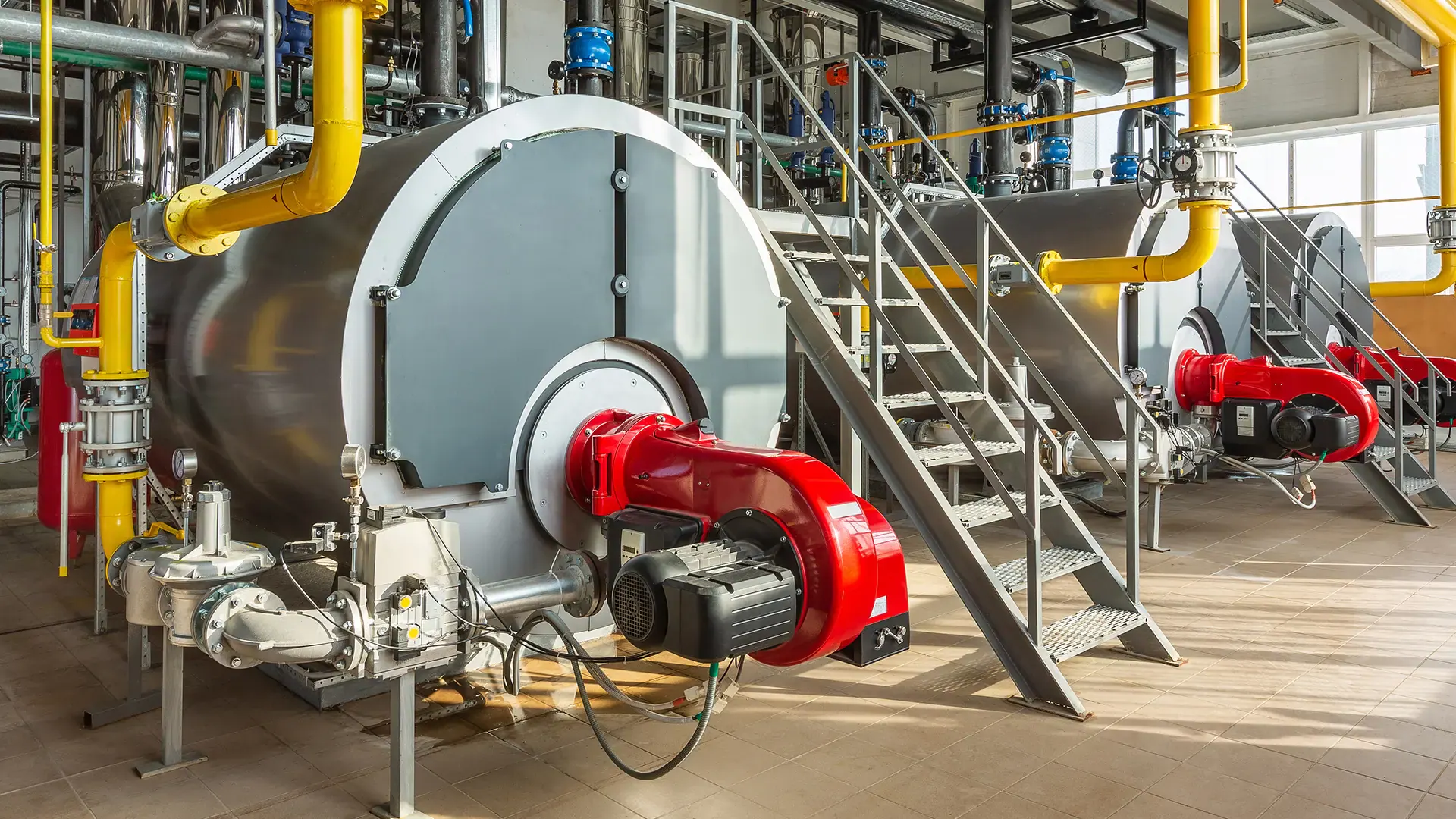
Do not oversize. A boiler that runs far below its rating cycles on and off, loses heat in every purge and wears its burner. Choose the working pressure the process needs plus the pressure drop in the steam lines; running a shell boiler far below its design pressure raises the steam velocity and the risk of water carry-over.
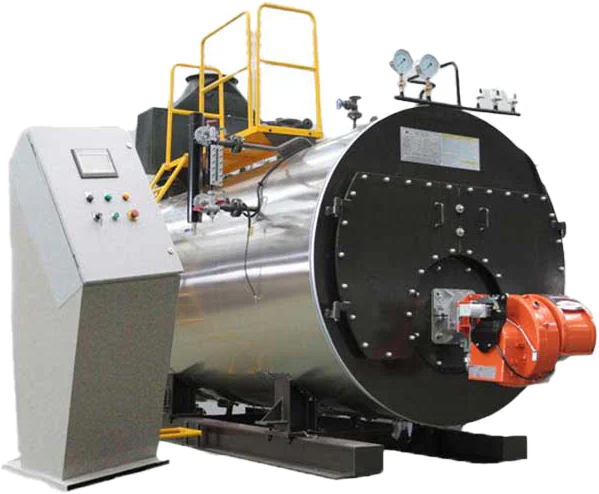
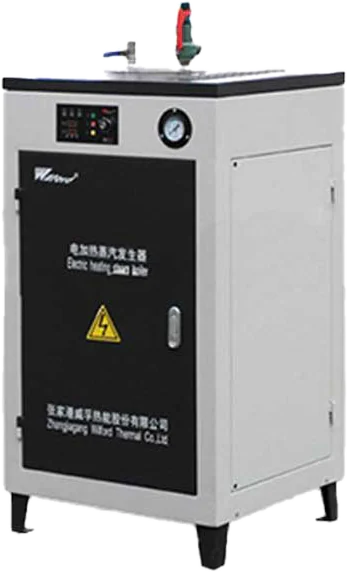
Several units give redundancy (N+1 for critical processes) and follow the load better. Steam generators can run several units in parallel on one skid for loads up to about 1 t/h; for larger steady loads the WNS fire tube steam boiler covers 0.5–20 t/h per unit.
05Hot water and thermal oil
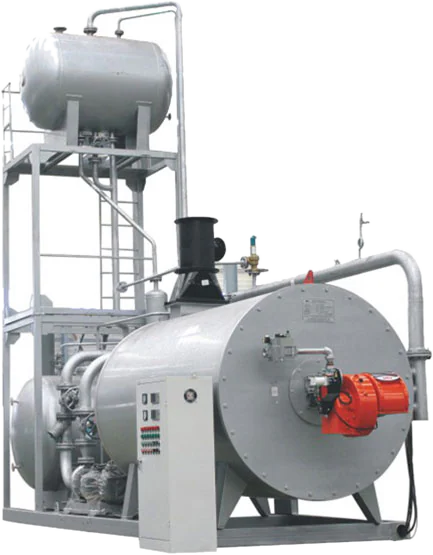
For hot water and thermal oil, size by heat: heat (kW) = flow (kg/s) × specific heat × temperature difference. For water the specific heat is about 4.19 kJ/kg·K; for thermal oil it is roughly half of that and depends on the oil and its temperature, so the circulation flow is larger for the same output. Thermal oil heaters are rated in kW — Wilford builds them from 24 to 6,000 kW.
Common questions
- How many kW is a 1 ton steam boiler?
- About 0.7 MW (700 kW) is the usual rule. The exact figure is 0.63–0.75 MW, depending on the feed water temperature and the steam pressure.
- How many boiler horsepower is 1 t/h?
- About 64 BHP. One boiler horsepower is 15.65 kg/h (34.5 lb/h) of steam from and at 100 °C, or about 9.81 kW.
- One large boiler or several small ones?
- One boiler is simpler and costs less to buy. Several units give redundancy and run closer to their rating when the load varies. A common arrangement is two boilers of 50–60 % of the peak load each.
Equipment in this article