Skip to content
Insights

Fire Tube vs Water Tube Boiler: Which One Fits Your Plant?

27 Oct 20263 min readWilford engineering team

Fire Tube vs Water Tube Boiler: Which One Fits Your Plant?

In short

In a fire tube boiler the hot flue gas runs through tubes inside a shell full of water; in a water tube boiler the water runs inside tubes surrounded by the flame. For most industrial plants that need up to about 20 t/h of steam at moderate pressure, a three-pass fire tube boiler is the simpler and more forgiving choice. Water tube designs win where you need a small water content, fast start-up, high pressure or a very large output.

On this page · 5 sections
  1. 01How a fire tube boiler works
  2. 02How a water tube boiler works
  3. 03Fire tube and water tube side by side
  4. 04Combined designs for solid fuels
  5. 05Which one should you choose?

01How a fire tube boiler works

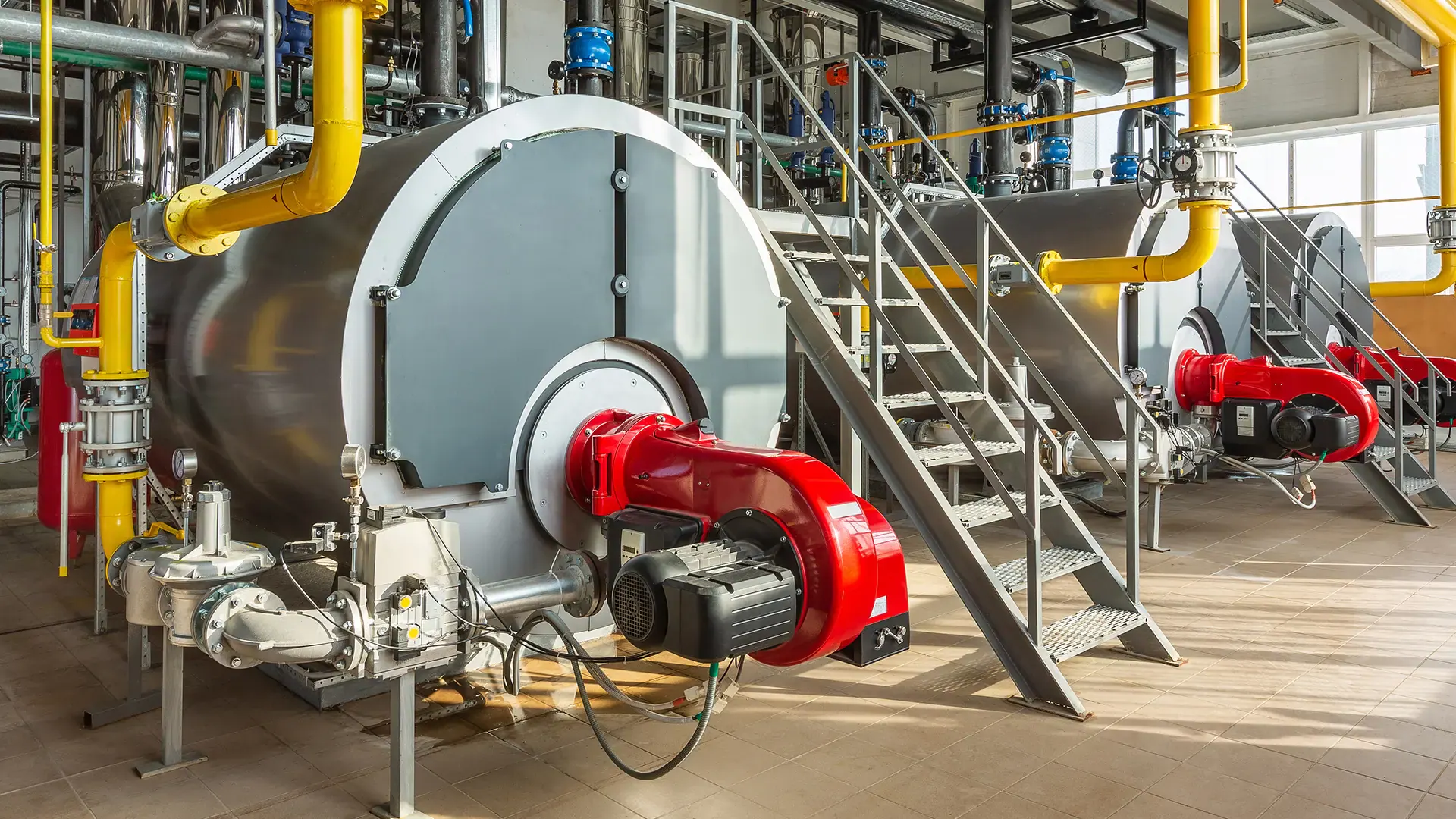
A fire tube boiler — also called a shell boiler — is a large horizontal or vertical vessel filled with water. The burner fires into a furnace tube inside the shell. The hot flue gas then turns and passes through banks of smaller smoke tubes before it leaves for the chimney. All the tubes sit under water, and the steam collects in the space above the water line.

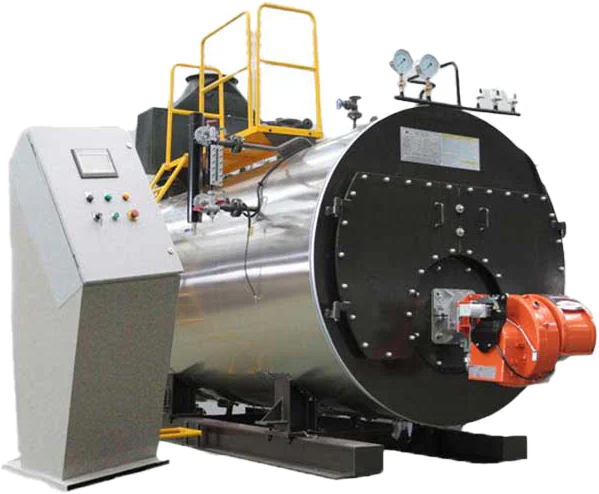
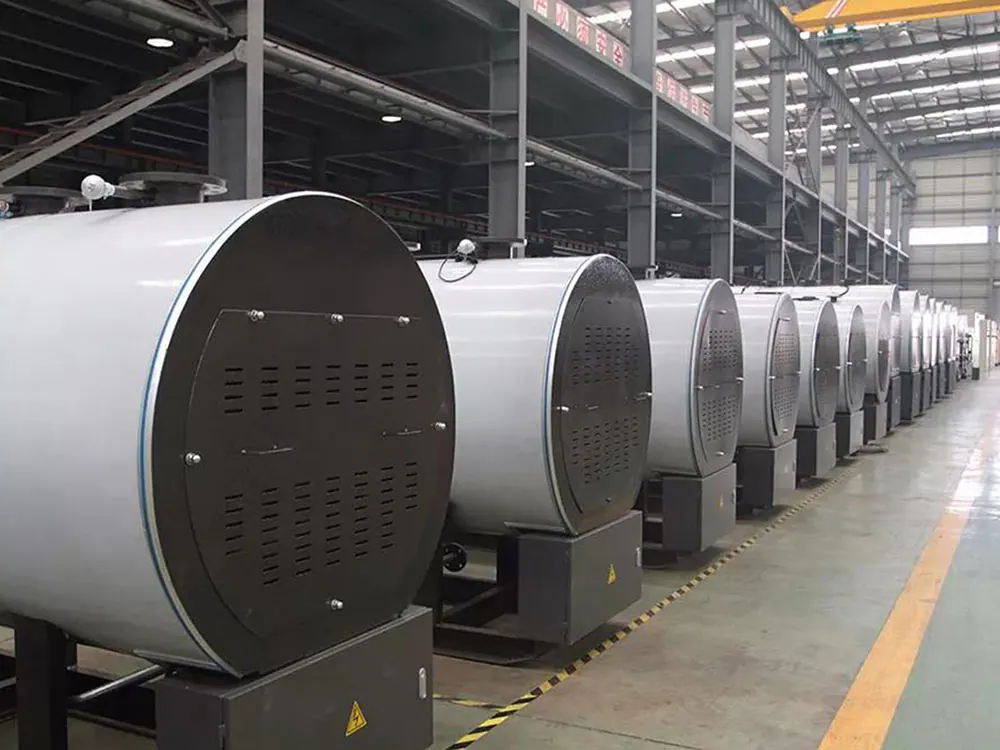
In a three-pass design the furnace is the first pass and two banks of smoke tubes are the second and third. Wet back means the chamber where the gas turns at the rear is surrounded by water instead of being lined with refractory, so that part of the boiler also takes up heat and needs less maintenance. The WNS fire tube steam boiler is built this way, from 0.5 to 20 t/h at 0.7–1.25 MPa.
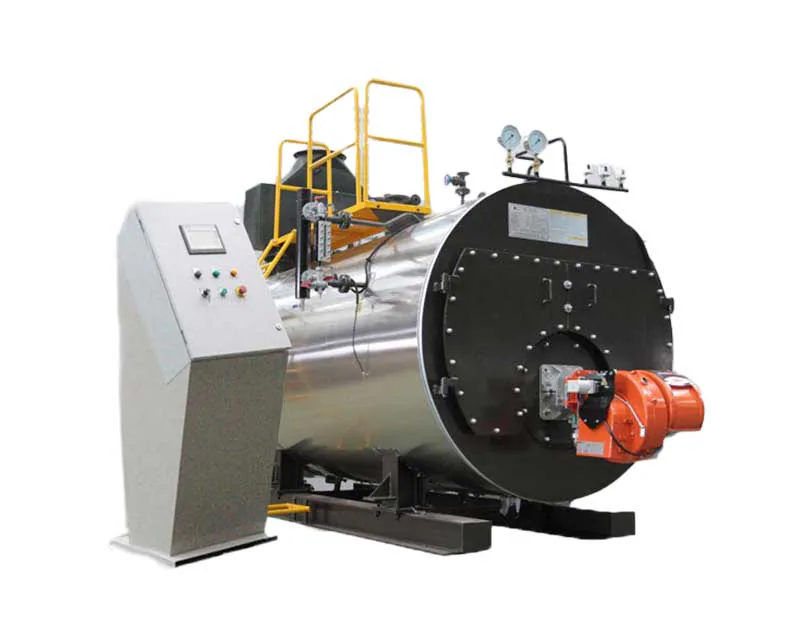
WNS horizontal three-pass wet-back fire tube steam boiler for natural gas, LPG and diesel.

02How a water tube boiler works

In a water tube boiler it is the other way round: water and steam flow inside the tubes, and the flame and flue gas pass around them. Because each tube has a small diameter, it can hold a high pressure with a thin wall. The boiler holds far less water than a shell boiler of the same output, so it heats up and responds quickly. Large power-station and process boilers are almost all water tube designs.

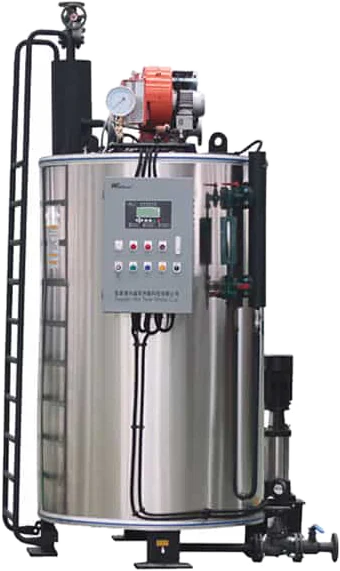
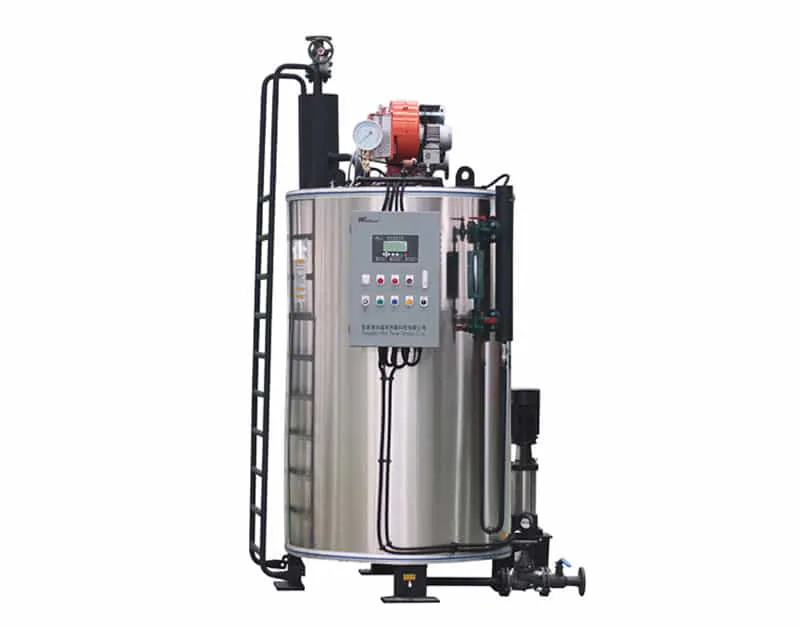
At the small end, a vertical water tube boiler is a compact way to raise steam fast. The LSS vertical water tube steam boiler has the burner on top, three gas passes and covers 0.5–2 t/h for gas or diesel.

LSS vertical water tube steam boiler with the burner on top.

03Fire tube and water tube side by side

Fire tube (shell) boilerWater tube boiler
Inside the tubesFlue gasWater and steam
Water contentLarge — stores energy and rides through sudden steam drawsSmall — heats up and responds quickly
Start-up from coldSlowerFaster
PressureModerate — the large shell limits the practical pressureHigh pressures are possible with small tube diameters
OutputSmall to medium (Wilford WNS: 0.5–20 t/h)From compact units to very large boilers (Wilford LSS: 0.5–2 t/h)
Feed water qualityMore tolerantNeeds stricter water treatment
MaintenanceSmoke tubes are cleaned from the endsMore tubes and joints to inspect
SpaceLong horizontal shellCan be compact and vertical
General characteristics; the right choice also depends on fuel, load profile and local rules.

04Combined designs for solid fuels

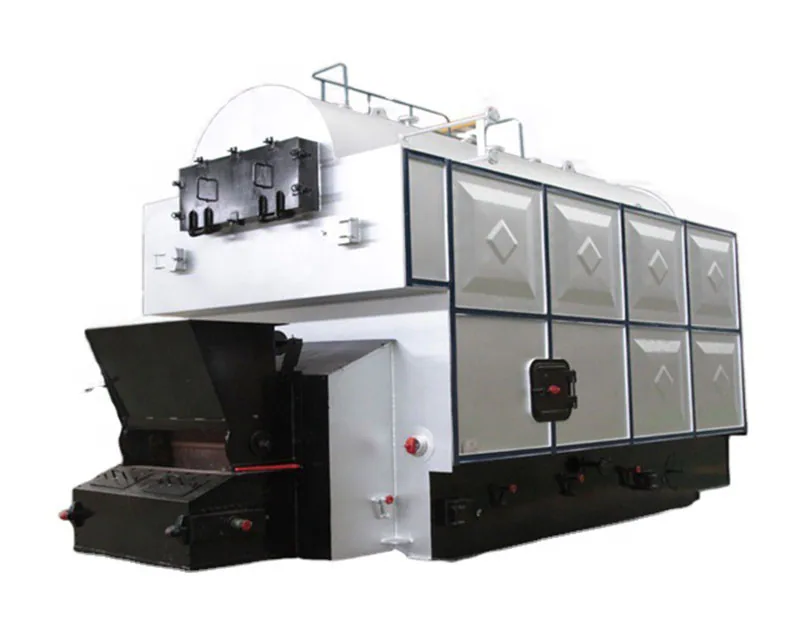
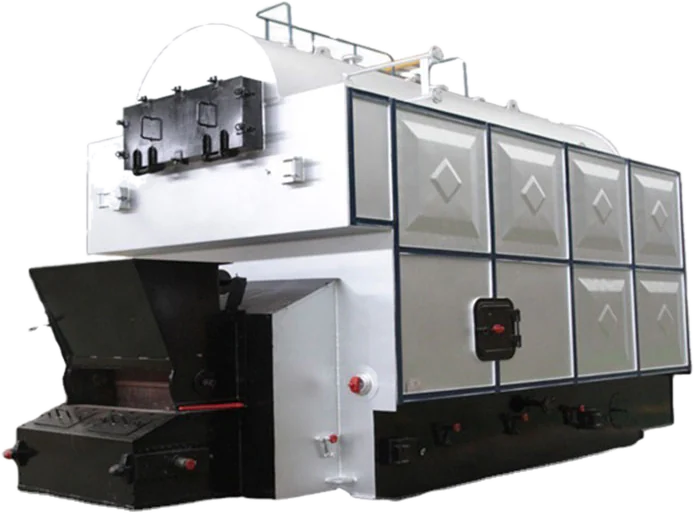
Boilers for coal and biomass often combine both principles. A chain-grate boiler such as the DZL biomass steam boiler has a drum with smoke tubes (the fire tube part) and water-wall tubes around the grate (the water tube part). The water walls take the radiant heat of the burning bed, and the smoke tubes recover heat from the flue gas.

DZL chain-grate boiler for biomass pellets, wood chips and coal.

05Which one should you choose?

  • Steady process steam, 1–20 t/h, gas or oil, up to 1.25 MPa: a three-pass fire tube boiler (WNS).
  • Small loads, little floor space or frequent starts: a vertical water tube boiler (LSS) or a steam generator.
  • Biomass pellets, wood chips or coal: a chain-grate DZL boiler.
  • Pressures above 2.5 MPa or superheated steam for turbines: a water tube boiler built under a higher licence class — Wilford’s class B licence covers boilers up to 2.5 MPa.

If you are not sure, send the output, working pressure, fuel and how the steam demand changes over a day. Our engineers will propose the type and size, with the parameter table for each option.

Common questions

Is a fire tube boiler more efficient than a water tube boiler?
Not by design type alone. Efficiency depends on the heating surface, the flue gas exit temperature, burner tuning and whether an economiser is fitted. Compare the fuel-to-steam efficiency of each offer at the load your plant really runs at.
What is a three-pass wet-back boiler?
A fire tube boiler in which the flue gas travels through the furnace and two banks of smoke tubes (three passes), and the rear turning chamber is surrounded by water instead of refractory.
Which type copes better with sudden steam demand?
A fire tube boiler. Its large water content stores energy, so the pressure drops less when a large consumer opens. A water tube boiler starts faster but has less reserve.

Quotation

Discuss a similar project

Tell us the output, working pressure, fuel and application. An engineer replies with a model selection and a quotation.

Optional · PDF, image, CAD, Office or ZIP · up to 3 files, 8 MB each

We use your details only to answer your enquiry. The form is protected by Cloudflare Turnstile.